

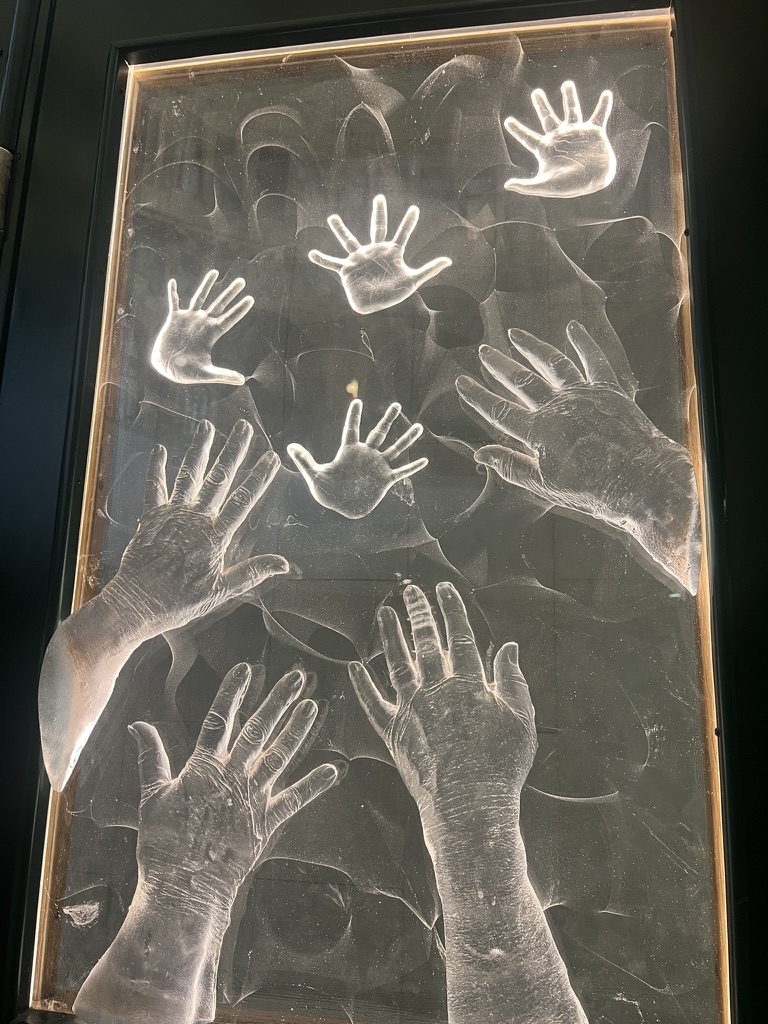
This article aims to explore what the Kindertransport was, how the Czechoslovak Kindertransports relate to those organised from Germany and Austria and how this history – and its memory – can be more fully understood through the personal story of Eva Paddock.
There is still so much to uncover about the Kindertransport even 88 years on from this historical event. As recently as 2024 – some 85 years later – I discovered the Kindertransport lists: documents that record who the children were, when and where they travelled, and which adult chaperones accompanied them on their journeys to safety. For decades these lists had been considered missing. In reality, they had been preserved in archives, waiting to be found. Many Kindertransport survivors had never seen them before. Only now is it possible to reconnect them with the very records that documented – and, in many ways, enabled – their escape from German Nazism.
For the first time, these lists can also be analysed alongside other sources, including letters, diaries, case files and governmental records, offering a fuller and more nuanced understanding of the Kindertransport. Today, the Kindertransport is often understood primarily as a rescue from the Holocaust. Yet it was also a response to the escalating violence of 1938, with Kristallnacht marking a decisive turning point in the lives of Jewish children.
What was the Kindertransport?
The term Kindertransport (German for ‘children’s transport’) – refers primarily to the rescue of predominantly Jewish children from Nazi-controlled territories (Germany, Austria, Czechoslovakia, Poland and the Free City of Danzig) between 1938 and 1940 to Britain. At the same time, similar rescue efforts brought children to other European countries, including the Netherlands, France, Belgium, Scandinavia and Switzerland are often collectively referred to as the Kinder (German for children). While the term suggests a single group, it encompasses thousands of individual stories of displacement, separation, and survival. The children ranged from infants to 18 year olds. They travelled to Britain by train and ferry, as well as by ship or, more rarely, by plane. Many of the trains left late at night. The children who came by train and ferry travelled for two days before they reached their new destination whereas the children who came via ship took three days to arrive.
Around 10,000 Jewish children reached Britain before the outbreak of the Second World War.
Once there, they were placed in a variety of settings, including foster families, hostels, convents, farms and boarding schools.

Source: Wikimedia Commons
Crisis after crisis: Britain responds with rescue plans
By the time the children fled on the Kindertransport, many – especially those living in Germany – had already endured six years of life under Nazism (1933–38). Their everyday worlds had become increasingly restricted by a growing web of discriminatory laws and regulations: they were gradually excluded from public life, barred from cinemas, parks and swimming pools, and eventually denied access even to education. The year 1938 brought further upheaval. In March Jewish children in Austria experienced the Anschluss while in September those in Czechoslovakia witnessed the Sudetenland Crisis. In both cases, they saw parts – or the entirety – of their countries annexed by Nazi Germany. Then, in October 1938, another forced displacement followed. As part of the Polenaktion, Jewish families of Polish origin were expelled from Germany and pushed across the border into Poland. Among them were many children who experienced uprooting even before their departure on the Kindertransport.
The turning point came after the catastrophic events of Kristallnacht (German for ‘Night of Broken Glass’) on 9–10 November 1938, when Jewish homes, businesses and places of worship were targeted, vandalised and destroyed. The shocking images reported in the press provoked widespread outrage among the British public. Within days, refugee organisations and religious groups appealed to Prime Minister Neville Chamberlain, urging the government to allow Jewish children to seek refuge in Britain without their parents. The proposal initially met with hesitation. However, following further discussions, Home Secretary Samuel Hoare – and subsequently the British Parliament – agreed to permit a coalition of voluntary organisations to organise the rescue. Crucially, all administrative and financial responsibilities were to be borne by these organisations. This meant that Jewish communities and supporting agencies were responsible for arranging accommodation and covering the children’s upkeep during their stay in Britain. At the outset, no fixed limit was placed on the number of children who might be admitted. This stood in stark contrast to the United States, where the 1939 Wagner–Rogers Bill – proposing the admission of approximately 20,000 Jewish refugee children – failed to pass in both the House of Representatives and the Senate. As a result, opportunities to rescue children beyond existing immigration quotas remained extremely limited.
How did the children obtain places on the Kindertransport? How did they prepare to leave their homelands?
All children required parental consent to leave their homelands. Securing a place on the Kindertransport was often a complex and time-consuming process, involving a substantial amount of paperwork. Jewish organisations received thousands of applications, far exceeding available places. Before departure, each child had to undergo medical checks and provide documentation, including a passport or other form of identification, as well as school records and individual behavioural reports.
Strict regulations also governed what children could take with them. Each was allowed one standard suitcase and a piece of hand luggage. The latter typically contained basic personal items such as eating utensils, tissues or a napkin, a pencil and addressed postcards.
Additional larger luggage could be taken only for an extra fee of 5 Reichsmarks (RM). Children were also permitted to carry 1 RM for refreshments during the journey; some trains included a tea service carriage where drinks could be purchased. Clear instructions regulated behaviour during travel. Children were forbidden from opening train windows at stations, expected to keep their compartments tidy, required to store their luggage properly and remain seated after boarding.

Source: Paměť národa / Ústav pro studium totalitních režimů
The costs of the children’s journeys had to be covered either by their parents or by Jewish communities in their countries of origin. Although prices varied, surviving records – particularly from Austria – allow us to reconstruct these expenses with considerable precision. For example, early cost estimates for the first transport from Vienna show that for children over the age of ten, the journey cost 20.50 RM from Vienna to the Dutch border, 3.70 RM from the border to the Hook of Holland and 6.90 RM for the ferry crossing to Harwich in Britain. In total, this amounted to 31.1 RM per child. Transporting 492 children in this age group cost 15,301.20 RM. For younger children, the costs were lower but still significant: 10.25 RM from Vienna to the Dutch border, 2.40 RM to the Hook of Holland and 6.90 RM for the final leg to Britain – 19.55 RM in total per child. For 30 children under the age of ten, this totalled 586.50 RM.
Altogether, transporting 522 children (492 over ten and 30 under ten) cost 15,887.70 RM – equivalent to approximately £78,000 today.
These figures highlight the financial burden placed on families and communities. At the same time, German Nazi authorities both accelerated and obstructed Jewish emigration: while forcing Jews to leave, they imposed strict regulations on what could be taken and extracted significant fees in the process.
Before departure, parents were given precise instructions regarding what to pack, as well as when and where to meet at train stations. The children’s luggage had to be inspected by customs, as they were not permitted to take valuables, such as jewellery and money, out of the country. Special permission was required to take items such as musical instruments or cameras. In many cases, one family member was required to deliver the child’s luggage to the station a day before departure. Each child was then assigned a number – known as their Kindertransport number – which had to be worn and corresponded to their luggage. This system ensured identification, but also reduced each child to a numbered entry within a larger administrative process. In addition, a deposit of £50 had to be paid to a refugee organisation in Britain by the parents, refugee committees or prospective foster families. This sum was intended to guarantee that the child would eventually emigrate elsewhere. It represented a considerable financial burden: £50 in 1938 is equivalent to approximately £4,600 today.
The Kindertransport was a temporary scheme
The Kindertransport was conceived as a temporary measure. The children were not expected to remain in Britain; rather, it was assumed that they would later be reunited with their parents in other countries. In many cases, however, this hope was never realised. With the outbreak of the Second World War, borders closed and escape routes disappeared, leaving many parents trapped in continental Europe. The moment of departure was carefully regulated.
Parents were strongly advised not to wave or call out loudly as they said goodbye to their children, in an effort to maintain order and avoid scenes of distress.
Yet the emotional reality of these departures could not be contained. For many children, the journey combined conflicting feelings: excitement at travel, sometimes for the first time, curiosity about the world beyond their home, relief on crossing the Dutch border, but also fear, uncertainty and loneliness at being separated from their parents. For the parents, the farewell was often unbearable. Many struggled to hold back their tears, trying instead to reassure their children with the promise that they would see one another again – a promise that, for countless families, would remain unfulfilled.
Reassessing the origins and limits of the Kindertransport: why the Kindertransport took place and why Britain eventually imposed a limit on how many children it could rescue
Discussions about a large-scale rescue of Jewish children from German Nazi-controlled territories had already begun in Britain weeks before Kristallnacht. However, the violent antisemitic attacks of 9–10 November 1938 – and the shocking reports that followed – created a sense of urgency. The need to act became immediate, particularly as Jewish teenage boys were arrested and imprisoned in concentration camps such as Dachau, and many fathers were taken into custody. Britain’s response was swift. Within less than a month, the first Kindertransport arrived from Berlin on 2 December 1938. Shortly afterwards, on 8 December, Parliament debated whether Britain might admit as many as 50,000 children. Yet these early ambitions soon encountered practical limitations. By July 1939, refugee committees imposed a ceiling of 10,000 children, citing the difficulty of securing sufficient foster homes and financial support. In their July report, they also noted the worsening conditions in Central Europe, but concluded that these did not justify raising the limit. As a result, the Kindertransport remained geographically restricted. No transports were organised from regions further east than Czechoslovakia.
This underscores both the urgency and the limits of the initiative: while thousands of children were rescued, many others – particularly those in Eastern Europe – remained beyond its reach.
What were the Czechoslovak Kindertransports?
Between March and August 1939, eight Kindertransports departed from Prague to Britain by train and ferry. The first arrived on 14 March 1939 – just one day before German Nazi troops entered Czechoslovakia. In response to the rapidly deteriorating situation, refugee organisations mobilised quickly. Until then, rescue efforts had focused primarily on Jewish children from Germany and Austria. However, figures such as Nicholas Winton, Trevor Chadwick, Doreen Warriner and Marie Schmolka had already been advocating for the inclusion of children from Prague.
- Trevor Chadwick (1907–1979): A British schoolteacher who played a key role on the ground in Prague, arranging travel documents and transport for children rescued from Nazi-occupied territories.
- Doreen Warriner (1904–1972): A British economist who initiated early rescue efforts in Prague in 1938, helping refugees escape Nazi persecution and laying groundwork for later operations.
- Marie Schmolka (1893–1942): A Czech Jewish social worker and Zionist activist who coordinated refugee aid and emigration efforts for Jews fleeing Nazi-controlled areas before and during World War II.
After March 1939, these efforts intensified significantly. Parents in Czechoslovakia were acutely aware of developments in Germany and Austria. Faced with mounting uncertainty, many made the difficult decision to entrust their children to strangers.
It was, in many cases, a leap of faith: a belief that distance – however painful – might offer safety.
At the same time, waves of political refugees were already fleeing the country, reinforcing the sense that the situation could deteriorate further. That fear would soon prove justified.
Are the transports from Prague part of the Kindertransport?
Until recently the question remained whether the Czechoslovak transports in 1939 were part of the Kindertransport that rescued some 10,000 children to Britain. The lists I found at Yad Vashem now confirm that the children who departed from Prague were indeed included in this broader rescue effort. This finding challenges a long-standing assumption that Sir Nicholas Winton had organised a separate and independent operation. In reality, some of the transports from Prague were integrated into the wider Kindertransport network – for example, by passing through Vienna, where additional children joined along the route. Today, this shared history is reflected in a network of memorials and commemorative initiatives linking Britain, the Czech Republic, Slovakia and other countries of origin. Kindertransport memorials can be found, for instance, at the departure station in Prague and the arrival station in London. Survivors themselves have played an active role in shaping these cross-border forms of remembrance. The newly identified lists also help clarify longstanding discrepancies in the number of children rescued from Czechoslovakia. While earlier estimates suggested 669 children, the lists record 679 names. By contrast, the Nicholas Winton website documents 612 individuals. These findings allow us, for the first time, to move closer to establishing a verified number of children rescued from Czechoslovakia.


Eva’s Kindertransport story: learning about her Kindertransport list for the first time
In 2026 I was able to present Eva Fleischmann (now Paddock) and her sister, Milena, with their Kindertransport lists – documents they had never seen before. The sisters discovered, for the first time, that they had been recorded on two separate transports. This realisation came 87 years after the journey that had saved their lives. Eva’s story reflects many elements shared by other Kindertransport children, yet it is also distinctly her own. At just three years old, she was among the youngest to travel. Her sister Milena, nearly ten at the time, assumed responsibility for her during the journey.
Eva and Milena were scheduled to depart on the seventh transport from Prague, which left on 19 July 1939 and arrived in Britain the following day, on 20 July. The exact number of children on this transport remains uncertain. Initial lists record 91 children, yet evidence suggests that only 76 may have ultimately arrived. The Nicholas Winton list, available online, presents figures that differ from those found in the Kindertransport lists and in correspondence with Dutch border authorities. In some cases – including that of Eva and Milena – names appear crossed out, indicating last-minute changes: https://www.nicholaswinton.com.
A letter sent to the Dutch Kindertransport committee and border guards states that the transport consisted of 81 children and was expected to reach the border at Oldenzaal at 16:51. From there, the children continued their journey by ferry – coincidentally named Prague. The ferry carried 187 passengers, including 77 refugee children, as well as 86 tons of cargo and 229 bags of mail. It arrived in Harwich at 05:40 on 20 July 1939.
In the end, Eva and Milena did not depart on the seventh transport. Instead, they left Prague on the final Kindertransport, on 1 August 1939. On the earlier transport they had been assigned the numbers 548 (Eva) and 549 (Milena). On the final transport – the one that saved their lives – they were recorded under the numbers 639 and 641. These were their Czech committee numbers. Their overall Kindertransport numbers were 8654 and 8655. As with earlier transports, the exact number of children remains uncertain. Their list records 76 children, while a Dutch letter refers to 75. The journey appears to have followed the same route and schedule as the previous transport, reaching the Dutch border at Oldenzaal at 16:51. On that same day, another transport from Germany – carrying 71 children – also crossed the border. The two groups met and continued together, boarding a ferry at the Hook of Holland. This time, the ship was called Vienna. The ferry records confirm the scale of the journey: 236 passengers, including 137 refugee children, alongside 87 tons of cargo and 155 bags of mail.
Eva and Milena arrived in Harwich on 2 August 1939, at 07:55 – just one month before the outbreak of the Second World War.
Listed with Eva: the fates of other children
Among the names recorded alongside Eva and Milena on their Kindertransport list are those of two brothers, Hans and Ludwig Immergut. In fact, the brothers appear on three separate Prague transport lists – yet, despite having secured places, they did not escape. In 1942 Hans and Ludwig were deported to Terezín and later to the Warsaw Ghetto, where they perished. Today, their names are inscribed on the children’s memorial at Terezín. Their story stands in stark contrast to that of Eva and Milena. They, too, had been meant to travel to Britain – to continue their childhoods in safety. Instead, their journey was cut short. Eva and Milena reached Britain. Yet survival did not mean the end of hardship, but the beginning of a different set of challenges.
Living in Britain: a different bread
In Britain, Eva and Milena had to adapt to an entirely new life. They were taken in by a foster family, the Radcliffs, and gradually adjusted to unfamiliar customs, language and food. Milena would later recall something seemingly small, yet telling: the taste of bread, so different from what they had known in Czechoslovakia.


Unlike many siblings who were separated after arrival, Eva and Milena were able to remain together. This allowed them to preserve a sense of continuity – speaking Czech with one another and holding on, in part, to their cultural identity. Milena attended the Czech State School, established by the Czechoslovak government-in-exile for refugee children in Britain. With the outbreak of the Second World War, the sisters – like many other children – were evacuated from cities to the countryside as part of Operation Pied Piper, in response to the aerial bombings of the Blitz. For many, this meant a second displacement. Some children, along with their foster families, lost their lives during these attacks. Despite having found refuge, the children were also regarded with suspicion. Classified as ‘enemy aliens’, they were required to register with the police and were subject to various restrictions, including limited access to certain public spaces. Some were even interned and sent to camps in Canada and Australia. Although many were later reclassified as ‘friendly aliens’ and released, distrust lingered. Refugee children also sometimes faced bullying and antisemitism in British schools. As the war progressed, many Kinder – now teenagers and young adults – chose to support their host country. They served in the armed forces or contributed on the home front. Over 30 lost their lives while serving with the Allied forces. Some took part in the D-Day landings; others were involved in the liberation of concentration camps. After the war, a number of them worked as translators during early war crimes trials.
The post-war and the legacy of the Kindertransport
After the war, some of the children returned to their countries of origin. In many cases, however, their parents were no longer there, having perished in the Holocaust. Eva’s story was exceptional: both of her parents survived. Her father, a politician, had played a key role in securing his children’s escape, while her mother’s route to safety – via Norway to Britain – was far less typical. Like many Kindertransport children, Eva spoke little about her early experiences for many years. She was trying to build a new life, and the past remained painful and difficult to revisit. In time, however, she chose to confront these memories. When she once asked her mother what it had felt like to place her on the Kindertransport, the answer was stark: ‘she felt like she was dying.’ Today, Eva encourages others to ‘unknot the past’. She has also reclaimed her identity as a Jewish woman and become an active participant in preserving the memory of the Kindertransport. Together with her sister Milena, she has returned to Prague, shared her story publicly, and taken part in commemorative events and memorial initiatives. Their story is not only one of survival, but of remembrance. Through their continued engagement, Eva and Milena have become part of the living legacy of the Kindertransport – helping to ensure that its history is not only remembered but understood.
In summary
This article has outlined the history of the Kindertransport (1938–40), situated the Czechoslovak transports within this broader context, and reflected on the personal story of Eva Paddock, rescued as a young child. Decades later, the story of the Kindertransport re-entered public consciousness through the 1988 television programme That’s Life!, hosted by Esther Rantzen, which introduced Nicholas Winton’s efforts to a wide audience. Following the broadcast, Milena was contacted and later met the man who had helped save her and her sister. Eva, too, would meet Winton. Yet it was not until 2026 – 87 years after their journey – that the sisters saw their Kindertransport lists for the first time. Their story continues to unfold, not only through personal testimony, but also through archival discoveries that are still coming to light. The history of the Kindertransport is not closed: it remains a field of ongoing research, shaped by memory, documents and the experiences of those who lived through it.
Bibliography
- Chadwick, William, The Rescue of the Prague Refugees 1938–39 (Matador: Kibworth Beauchamp, 2010)
- Fast, Vera K., Children’s Exodus: A History of the Kindertransport (I. B. Tauris: London, 2011)
- London, Louise, Whitehall and the Jews 1933–1948 (Cambridge University Press: Cambridge, 2000)
- Sharples, Caroline, ‘Kindertransport: Terror, Trauma and Triumph’, History Today 54:3 (2004), pp. 23–29
- Turner, Barry, … And The Policeman Smiled: 10,000 Children Escaped from Nazi Europe (Bloomsbury: London, 1990)
- Warriner, Henry, Doreen Warriner’s War (Book Guild Publishing: London, 2019).
- Williams, Amy and Bill Niven, National and Transnational Memories of the Kindertransport: Exhibitions, Memorials, and Commemorations (Camden House: Rochester, NY, 2023)
- Winton, Barbara, If It’s Not Impossible … The Life of Sir Nicholas Winton (Matador: Kibworth Beauchamp, 2014)